 how-to
How Often Should Men Get Haircuts: A Complete Guide
Table of Contents
- The Standard Haircut Schedule: Why Every Three to Six Weeks Works
- How Often to Get a Fade Haircut
- How Often to Get a Haircut for Short Hair
- How Often to Get a Haircut for Long Hair
- Hair Texture and Growth Rate: Personalizing Your Haircut Frequency
- How to Tell Your Barber What You Want
- Maintaining Your Haircut Between Barber Visits
- Budget and Scheduling: Finding Your Haircut Rhythm
- Frequently Asked Questions
Last Updated: October 18, 2026
The Standard Haircut Schedule: Why Every Three to Six Weeks Works
The most common recommendation is that how often should men get haircuts depends on your style, but the three-to-six-week window works for most men.
This timeframe balances two competing needs: keeping your style sharp and intentional without living in a barber's chair.
The exact timing within that range depends on three factors:
- Your haircut style (fades need more frequent trims than longer styles)
- Your hair growth rate (genetics matter)
- How neat you want to look (some men accept more growth; others don't)
A fresh haircut is a ritual; letting it go too long turns grooming into maintenance instead of intention, while cutting too often wastes time and money.
How Often to Get a Fade Haircut
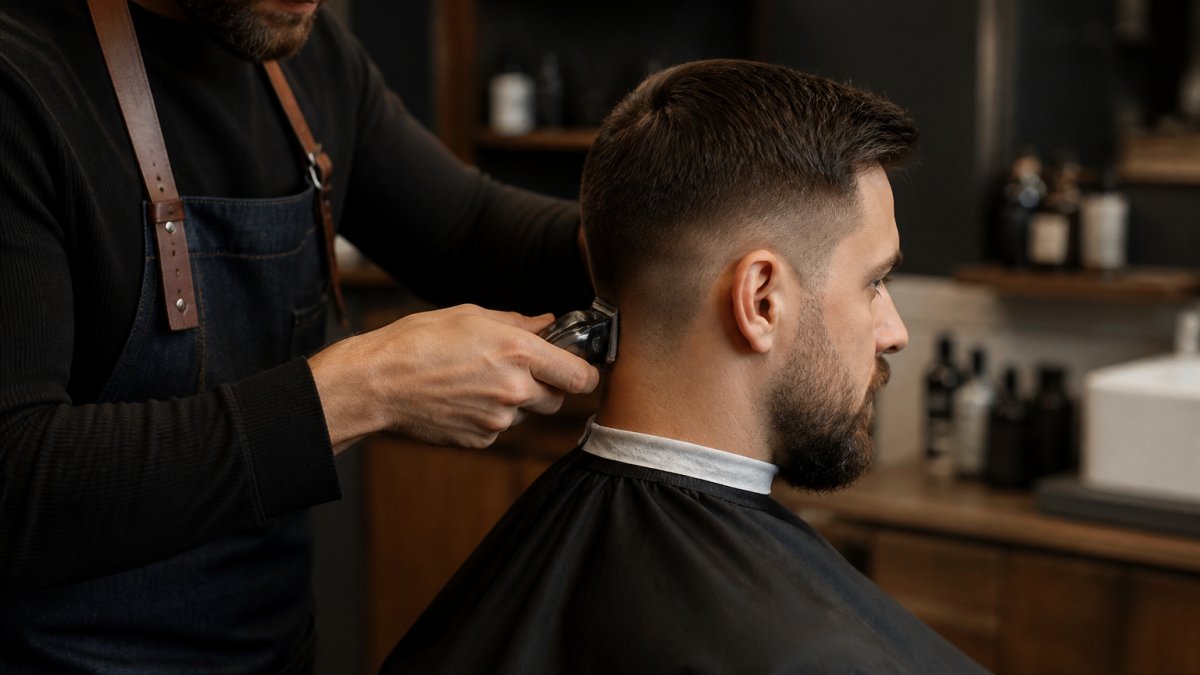
A fade relies on sharp lines and blended transitions, so it shows neglect faster than other cuts.
A fade is all about contrast. As hair grows out, the fade softens and the lines blur, so what looked clean and precise starts looking sloppy.
If you're wearing a fade, expect to commit to this schedule:
- Tight fades (skin visible at the sides): every 2-3 weeks
- Mid fades (some length at the sides): every 3-4 weeks
- High fades (more length overall): every 4-5 weeks
The tighter the fade, the more often you need to maintain it. Some men decide the style isn't worth the upkeep, and that's a legitimate choice.
How Often to Get a Haircut for Short Hair
Short hair doesn't have the same contrast problem. When a buzz cut grows out, it just gets longer. It doesn't look wrong; it just looks less sharp.
Most men with genuinely short hair can go four to six weeks between cuts:
- Buzz cuts (quarter-inch or shorter): every 4-6 weeks
- Crew cuts (half-inch to three-quarters inch): every 4-6 weeks
- Short textured cuts (longer on top, short on sides): every 3-5 weeks
The key variable is how much length difference you have between the top and sides.
Short hair also means less styling time at home: you wake up, maybe run your hands through it, and you're done. You're trading frequency for simplicity.
How Often to Get a Haircut for Long Hair
Long hair is the opposite problem. You can go six to eight weeks between cuts because the style doesn't depend on sharp lines.
But the ends matter more. When hair gets long, split ends become visible and make it look ragged and unmaintained, even if the cut is fine.
Long hair maintenance also depends on what you're doing with it:
- Long and natural (no styling): every 6-8 weeks
- Long with a defined part or style: every 5-7 weeks
- Shoulder-length or longer: every 6-8 weeks
The other factor is neckline maintenance. Long hair that touches your neck can look sloppy if the neckline isn't clean.
Hair Texture and Growth Rate: Personalizing Your Haircut Frequency
Most guides stop at "hair grows about half an inch a month," but the practical question is how that growth changes the look of your specific cut. Texture and growth rate work together, and the right interval is the point where your style stops reading as intentional.
Growth rate: the baseline math
Hair grows roughly half an inch per month on average, but the range is wide: some men see closer to three-quarters of an inch, others closer to a third. Genetics, age, diet, and overall health all influence the rate. To estimate yours, measure from your hairline to a fixed point (like the top of your ear) right after a cut, then check again in four weeks.
How texture changes the appearance of growth
Texture doesn't usually change how fast hair grows, but it changes how quickly growth becomes visible and how the cut distorts as it lengthens.
- Straight hair shows length immediately. A skin fade or tight taper with straight hair can look noticeably softer after two weeks because the contrast between the shaved sides and the top blurs. Straight hair often needs the shorter end of any interval.
- Wavy hair shows growth but hides some of it in the wave pattern. Most wavy-haired men fit comfortably in a four-to-six-week window, with the shorter end for tight fades and the longer end for softer, layered cuts.
- Curly hair shrinks up when short, so it looks shorter than its actual length. As it grows, the curl pattern extends and the silhouette changes shape rather than just getting longer. Many curly-haired men can stretch to six to eight weeks, but the cut needs to be shaped for the curl pattern, not just shortened.
A practical texture-to-interval starting point
| Texture | Tight fade or taper | Soft or layered cut | Longer style |
|---|---|---|---|
| Straight | 2-3 weeks | 3-5 weeks | 5-7 weeks |
| Wavy | 3-4 weeks | 4-6 weeks | 6-8 weeks |
| Curly | 3-5 weeks | 5-7 weeks | 6-8 weeks |
| Coily | 3-5 weeks (plus shape-up) | 5-7 weeks | 6-8 weeks |
Treat the table as a starting point, not a rule. The observable signal is simpler: when you can no longer recreate the shape your barber gave you with normal styling, you're past your interval.
The photo test
Take a photo the day you get your haircut. Compare it at three, four, five, and six weeks. Most men find their personal sweet spot within two or three cycles. That is more reliable than any general recommendation because it reflects your growth rate, your texture, and the cut you actually wear.
How to Tell Your Barber What You Want
You can have the best barber in the world, but if you can't communicate what you want, you'll end up frustrated.
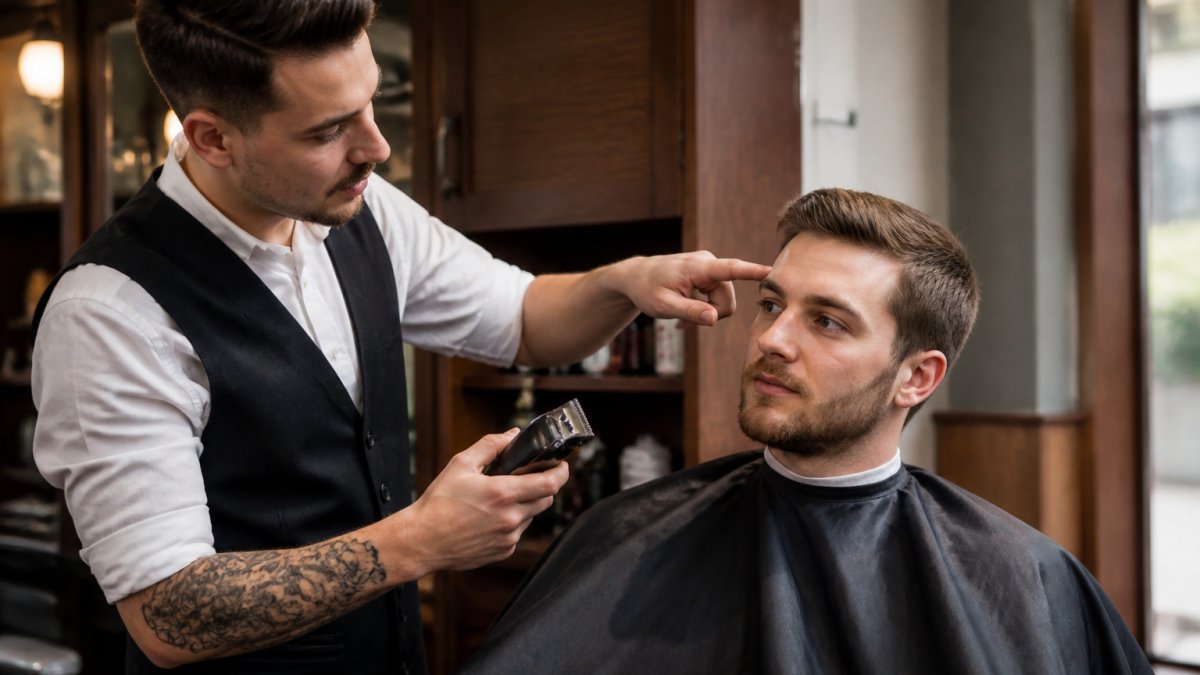
Start with specifics, not vague descriptions. "I want it shorter" is useless.
Bring reference photos if you can.
Talk about your hair's specific characteristics:
- Hair texture: "I have thick, straight hair" or "My hair is curly"
- Growth pattern: "My hair grows really fast" or "My sideburns grow differently"
- Styling commitment: "I don't style my hair" or "I use product every day"
A good barber will ask clarifying questions because precision matters: they want to understand not just what you want to look like, but how you live.
Maintaining Your Haircut Between Barber Visits
How you maintain your haircut between visits directly affects how long it stays looking sharp.
For most men, this means basic grooming:
- Wash regularly (2-3 times per week for most hair types)
- Use product if you style (a light pomade or paste keeps things intentional)
- Keep your neckline clean (trim stray hairs with clippers or scissors if you're comfortable; otherwise, let your barber handle it)
How you treat your hair at home affects how long your cut looks good.
For men with fades or precise styles, a little at-home maintenance can extend the time between cuts by a week or two. A small pair of clippers lets you touch up the sides without touching the top.
Budget and Scheduling: Finding Your Haircut Rhythm
How often you get a haircut is partly a style decision and partly a life decision. Choose the interval your style needs, then adjust for budget, schedule, and how much upkeep you're willing to do at home.
The annual math
A simple way to compare intervals is to convert them into visits per year:
- Every 2 weeks: about 26 visits
- Every 3 weeks: about 17 visits
- Every 4 weeks: about 13 visits
Multiply your barber's price by the visit count to get your annual grooming cost. Moving from a three-week fade to a five-week softer cut can cut the number of visits roughly in half, which is the single biggest lever most men have over their grooming budget.
The trade-off between style and upkeep
Tighter styles (skin fades, sharp tapers, hard parts) demand shorter intervals; softer styles (scissor cuts, layered medium lengths, natural curls) tolerate longer ones. The honest question isn't "what looks best on day one" but "what still looks good on day twenty-one." A style requiring a three-week cadence you can't sustain will look worse on average than a slightly softer style you can maintain.
Scheduling realities
- Work travel: book a cut shortly before a trip and plan the next one for your return. Do not try to squeeze in a cut mid-trip unless you have a trusted barber in that location.
- Appointment availability: popular barbers book out. If your barber is two weeks out, your real interval is your intended interval plus the booking lead time. Book the next appointment before you leave the chair.
- Seasonal shifts: many men go shorter in summer and slightly longer in winter. That can mean a shorter interval in summer and a longer one in winter without changing your overall style.
A personalized decision checklist
Instead of picking a number in advance, watch for these observable signs that it is time to book:
- You cannot recreate the shape with your normal styling routine.
- The neckline looks fuzzy in photos.
- The sides have lost their contrast with the top.
Two or more of these signals is a practical trigger to book, regardless of the calendar.
When to stretch and when not to
Stretching an interval is reasonable if you are willing to do light at-home upkeep (cleaning the neckline, taming the sides) and if your style tolerates it. It is not reasonable if your workplace or personal standard requires a sharp outline, or if you are prepping for an event. In those cases, a quick shape-up between full cuts is often cheaper than moving the whole schedule earlier.
Frequently Asked Questions
How often should men get haircuts if they want to maintain a clean-cut look?
Most men should get a haircut every three to six weeks to maintain a neat appearance and keep their style sharp. The exact frequency depends on your hairstyle, hair growth rate, and how quickly your haircut loses its shape. Faster-growing hair or styles with defined lines, like fades or tapers, may require visits every three to four weeks. Slower-growing hair or longer styles can stretch to six or eight weeks. Your barber can recommend the ideal schedule during your first appointment based on your specific hair and style.
How often should men with short hair get a haircut?
Men with short hair typically need a haircut every three to four weeks. Short styles show regrowth quickly and lose their shape faster than longer cuts. Buzz cuts and fades are particularly visible as hair grows out, so regular trims keep the style looking intentional. If you prefer a slightly more relaxed appearance, you might extend to five weeks, but waiting longer than six weeks will usually result in a noticeably unkempt look. Discuss your preferred maintenance level with your barber to find the right schedule.
How do I know when it's time for a haircut?
You'll know it's time for a haircut when you notice the neckline is overgrown, the sides are starting to blend into the top, or your style no longer has clean lines and definition. If your hair feels unmanageable or you're spending extra time styling it to look neat, that's another sign. For fades and tapers, the break-even point between haircuts is typically three to four weeks, when regrowth becomes visible. Keep a calendar reminder or schedule appointments in advance so you don't wait too long and lose the structure your barber created.
How do I tell my barber what haircut I want?
Use specific language about length and style rather than vague descriptions. Reference the sides, back, and top separately, for example, 'I want a fade on the sides and back, short on top with some length to style.' Bring photos of styles you like to show your barber directly. Discuss hair texture, curl pattern, and your styling routine so your barber can recommend a cut that works with your hair type. Ask about maintenance frequency and at-home care during the consultation. A good barber will ask clarifying questions and suggest adjustments based on your face shape and hair characteristics.
Finding the right haircut frequency is personal. Your hair type, style choice, and lifestyle all matter. Most men fall comfortably in the three-to-six-week range, but the exact timing is yours to discover. A CUT ABOVE specializes in precision haircuts and personalized grooming that respects your time and your standards. Book Now to work with a barber who understands that how often you cut matters less than that you cut with intention.