 How-to
How to Choose a Barber for Your Child's First Haircut
Last Updated: November 21, 2026
Quick Summary
To choose a barber for children, look for proven experience with toddlers and young kids, a patient and calm approach, and a shop with kid-size chairs and small capes. Ask how they handle crying or a child who won't sit still.
- Ask how often the barber works with children under six, since toddlers behave differently from older kids.
- Most children get their first professional haircut between 6 months and 2 years of age.
- Confirm the shop has a kid-size chair or booster seat and small capes sized for children.
- Ask whether the barber can start with clippers turned off to ease a nervous child.
- Book a time when your child is rested and fed, and agree on a stop signal before arriving.
Table of Contents
- What Makes a Barber Good With Children
- Barbershop vs. Kids' Salon: Which Setting Fits Your Child
- Checklist for Evaluating a Barber's Setup and Environment
- Questions to Ask a Barber Before Booking Your Child
- Finding the Best Barber for Kids Through Referrals and Reviews
- How to Prepare a Child for a Haircut
- Booking Your Child's First Appointment
- Frequently Asked Questions
What Makes a Barber Good With Children
Choosing the right barber for a child's first haircut matters more than most parents expect, and finding a skilled barber for children can make that first visit far easier. A bad first experience can make a child fear the chair for years. This guide explains how to choose a barber for children with confidence. A calm, attentive barber can help a child feel safe in the chair, and the same care matters when choosing a hair stylist for the whole family.
A good children's barber combines skill with temperament. Most children receive their first professional haircut between 6 months and 2 years of age, according to Florida Fadez industry observations on initial service adoption. That means the barber must work with babies, toddlers, and nervous young kids, not only with adults.
Experience with toddlers and young children
Ask directly how often the barber works with children under six. Experience with toddlers is different from experience with school-age boys. Squirming, crying, and sudden movement are normal at this age, and a barber who has handled them before will plan around those moments. Look for a barber who can describe how they handle a child who will not stay still.
Patience and a calm, unhurried approach
Patience is the trait parents remember most. A rushed cut creates tension, and tension makes children resist more. A calm barber speaks softly, explains each step, and lets the child take breaks. Pay attention during a consultation. If the barber makes eye contact with your child and gives them a simple job, such as holding a comb or choosing a sticker, that is a strong sign.
Barbershop vs. Kids' Salon: Which Setting Fits Your Child
Both settings can work. A traditional barbershop may suit older children who want a classic cut, while a dedicated kids' setting is often built around young clients. Neither is automatically better. The right choice depends on your child's temperament. A shy or sensitive child often does better in a calm, low-stimulation room. An outgoing child may enjoy the energy of a busy shop.
Visiting before booking is a practical way to judge the environment. Watch how staff interact with children already in the chair.
Checklist for Evaluating a Barber's Setup and Environment
Use this checklist when you visit a shop or call ahead:
- Kid-size chair or booster seat available
- Small capes sized for children
- Clean, well-organized tools and workstations
- Quiet area or waiting space for nervous children
- Entertainment such as books, screens, or toys
- Staff who greet children directly, not only parents
- Clear policies on appointment length and walk-ins
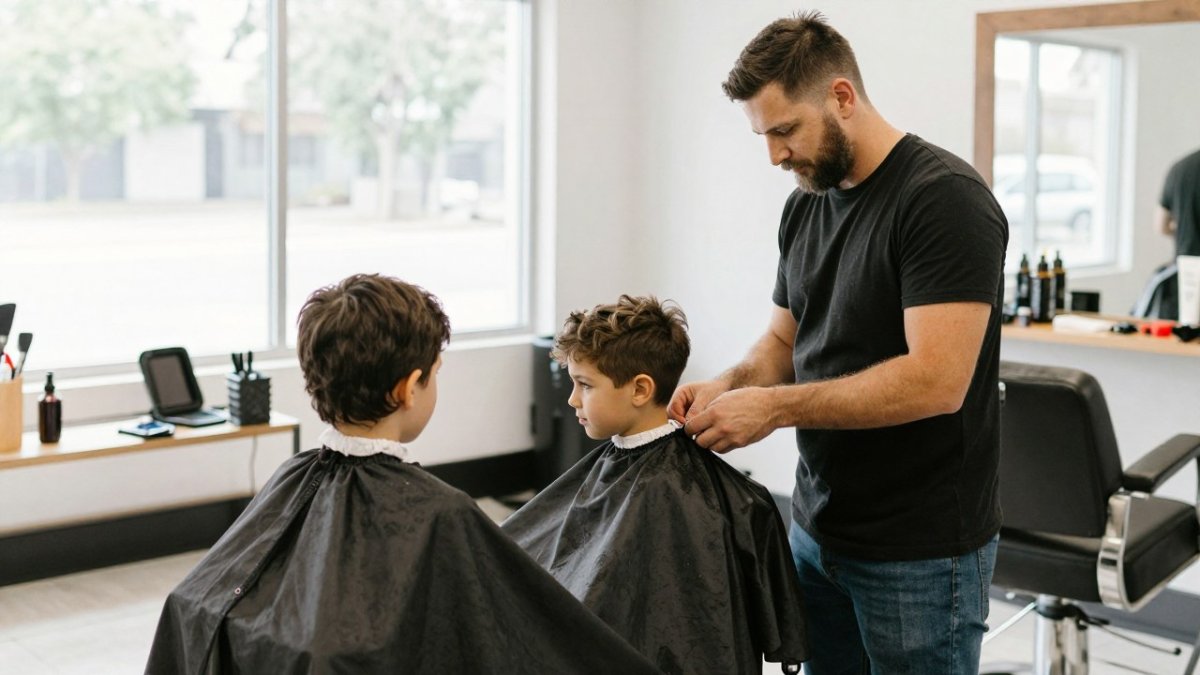
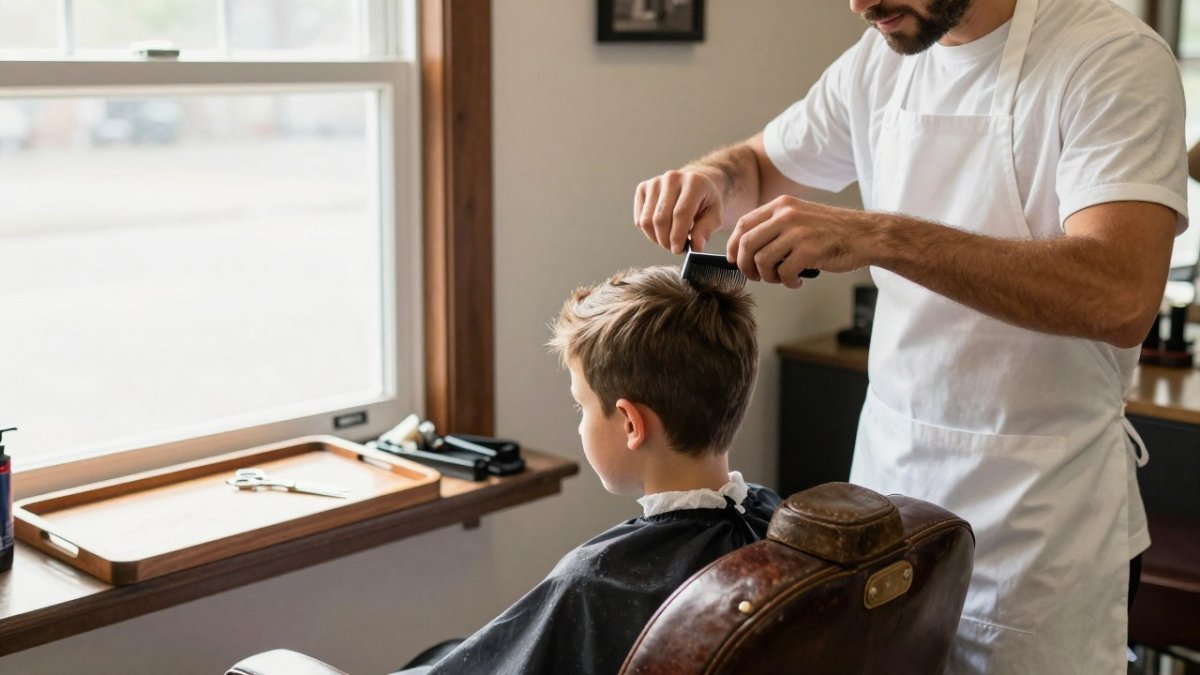
Kid-size chairs, booster seats and small capes
Equipment should fit the child. A standard adult chair forces a young child to sit awkwardly, and an oversized cape can slip over their face. Confirm the shop has a booster seat or kid-size chair before you book. A properly sized cape keeps hair off the child's neck and makes the experience more comfortable.
Entertainment, distractions and sensory comfort
Distraction works. A tablet, a favorite book, or a short video can keep a toddler still during the cut. Ask whether the shop allows personal devices or offers its own options. Sensory comfort matters too. Clippers are loud, and some children react strongly to the buzz and the feel of hair on their skin. Ask the barber how they introduce clippers to a nervous child, and whether they can start with the clippers turned off.
The checklist above covers what to look for in a shop; the table below summarises the setup points the article explains.
| Item | What to look for | Why it matters |
|---|---|---|
| Chair | Kid-size chair or booster seat | Adult chairs force awkward sitting |
| Cape | Small cape sized for children | Oversized capes can slip over the face |
| Entertainment | Books, screens or toys | Keeps toddlers still during the cut |
| Clippers | Ask to start with clippers off | Loud buzz and feel can upset nervous kids |
| Staff | Greet the child directly | Builds trust with the child, not only parents |
| Policies | Clear appointment length and walk-in rules | Avoids rushed cuts |
Questions to Ask a Barber Before Booking Your Child
Before you book, ask these questions:
- How many children under six do you cut each week?
- How do you handle a child who cries or refuses to sit?
- Do you offer a short first visit to get used to the chair?
- Can I stay in the room, and can I step in if my child needs me?
- What is your policy on appointment length for young children?
- How do you handle hair texture or sensitive scalps?
A good barber answers these questions clearly and without defensiveness. Vague answers are a warning sign.
Finding the Best Barber for Kids Through Referrals and Reviews
Personal recommendations are often the most reliable source. Ask other parents in your area who they trust with their children. Online reviews also help, but read them carefully. Look for comments that describe how the barber handled a child, not only how the haircut looked. A two-star or three-star review can be useful if it describes a specific concern, such as rushing or poor communication. Patterns across many reviews matter more than any single comment.
How to Prepare a Child for a Haircut
Preparation reduces fear, but it has to start earlier than the day of the appointment. Talk with your child a few days ahead. Explain what will happen in simple terms: the chair, the cape, the buzz of the clippers, and the mirror at the end. Showing pictures or short videos of a haircut helps young children know what to expect. Some parents practice at home with a pretend cape and a comb so the child can rehearse sitting still for a minute or two.
Plan the timing carefully. Book the appointment for a time when your child is rested, fed, and not due for a nap. A tired or hungry child is far harder to cut. Morning slots often work better for young children because the shop is quieter and the child is fresh. Bring a favorite toy or book, and set a simple reward for afterward, such as a small treat or a trip to the park. Praise your child for sitting still, whatever the result.
Tell the barber what you have already tried. If your child hates the sound of clippers, say so when you book. If a previous haircut ended in tears, describe what happened. A barber who knows the history can adjust the order of the cut, start with the least threatening part, or plan a shorter session.
What to do during a difficult or incomplete haircut
Even with good preparation, some haircuts go sideways. A child may cry, refuse to sit, or become so distressed that the cut cannot continue. Have a plan before you arrive:
- Agree on a stop signal with the barber, such as a raised hand or a code word, so you can pause without a scene.
- Ask the barber to cut the most visible areas first, so a partial cut still looks intentional if you have to stop.
- Take a break. A short walk, a drink of water, or a few minutes in a quiet corner can reset a child better than pushing through.
- Reschedule rather than force it. A half-finished cut can be blended at a second visit, and forcing a distressed child through the rest often makes the next appointment harder.
- If the cut has to stop, ask the barber what can be done to even it out at home or at a follow-up visit, and whether a shorter session next time would help.
Watch out: promising a reward only if the child "sits still the whole time" can backfire. A child who is already overwhelmed may give up entirely. Reward the effort of showing up and trying, not the finished result.
After the appointment, debrief briefly. Ask your child what felt okay and what felt scary, and pass that information to the barber before the next visit. A barber who keeps notes on young clients, or who remembers your child's preferences, is worth keeping. Consistency matters more than novelty: the same chair, the same barber, and the same routine make each haircut easier than the last.
Booking Your Child's First Appointment
When you book, mention your child's age and any sensitivities so the barber can prepare. Ask about appointment length and whether a short first visit is possible. Arrive a few minutes early so your child is not rushed.
For parents in the Laurel and Columbia area who want to see the setup in person, guidance on how barbershops are regulated and licensed in Maryland is a useful place to confirm a shop's licensing before you visit.
Learn more about finding a consistent barber you can trust in How to Find a Consistent Barber You Can Trust, and compare local options in Best Barbers for Men in Columbia: A Guide. When you are ready to book, haircuts for boys in Laurel, Maryland and how scheduling a precision haircut works in Maryland explain the local options.
At A CUT ABOVE, we believe a child's first haircut should feel calm and unhurried, the same standard we bring to every client. Book a visit to talk through your child's needs.
Frequently Asked Questions
At what age should a child get a haircut?
Many parents bring children in for a first professional haircut in infancy or toddlerhood. Many parents wait until a child's hair grows long enough to get in the way or until the child can sit still for a short appointment. Starting early can make later visits feel routine. When choosing a barber for children at this age, look for someone with clear experience working with toddlers, and plan a short appointment timed around nap time or a snack so the child is calm and comfortable.
How do I tell if a barber is good with children?
A barber who is good with children tends to speak to the child directly, explain each step before doing it, and let the child see the tools. Ask whether the barber has experience with toddlers and young children, and whether they use kid-size chairs and booster seats. Reviews from other parents, especially those mentioning patience and a calm pace, are useful signals. Pay attention during your visit to whether the barber rushes or keeps the child engaged. A good barber for children values comfort over speed.
Should I choose a barbershop or a kids' salon for my child?
A kids' salon usually offers child-focused seating, toys, and a shop designed around young clients. A traditional barbershop may offer a more relaxed, adult-oriented atmosphere that suits older children who want a classic cut. Barbershop vs. kids' salon is largely a question of your child's temperament and age. Toddlers and anxious children often do better in a dedicated kids' setting, while confident older children may enjoy a barbershop. Visit either one beforehand if you can to judge the environment.
What should I ask a barber before booking my child's first haircut?
Ask how often they cut children's hair, whether they have experience with toddlers, and what seating and cape options they use for small children. Ask how they handle a child who becomes upset or wiggles during the cut, and whether a parent can stay in the room. Confirm appointment length and pricing policies before you book. Clear answers to these questions help you judge whether the barber is a good match for your child's needs.