 How-to
How to Find a Consistent Barber You Can Trust
Last Updated: November 8, 2026
Quick Summary
To find a consistent barber, build a shortlist of three to five barbers through referrals and reviews, then judge their portfolios and test how they listen during a consultation. Confirm consistency by booking a repeat visit and comparing it side by side with the first cut.
- Start with a shortlist of three to five barbers from referrals and online research.
- Look for reviews that mention multiple visits and the same cut every time.
- Bring your own reference photos and show the same one to two or three barbers.
- Keep a haircut spec sheet with guard numbers, fade height, and neckline details.
- Book a repeat visit within two to four weeks and compare it with the first cut.
Table of Contents
- Why Consistency Matters More Than a Single Great Haircut
- Step 1: Build a Shortlist Through Referrals and Online Research
- Step 2: Judge Portfolios and Reference Photos Before You Book
- Step 3: Use a Consultation to Test How a Barber Listens
- What to Tell a New Barber So Your First Cut Is Repeatable
- How to Get the Same Haircut Every Time
- Booking Your First Visit and Scoring the Results
- Frequently Asked Questions
Finding a barber you can trust means finding one who gives you the same good haircut on every visit, not just one great cut. Most men settle for a single decent haircut from a chain shop and never think about whether the next visit will look the same. The steps below show how to find a consistent barber and how to test for it before you commit.
Why Consistency Matters More Than a Single Great Haircut
A great haircut is easy to get once. The harder part is getting that same result month after month, especially when your barber is busy or you see someone different. Repeatability is what separates a barber you can rely on from one who got lucky.
Consistency also saves you time and money. When your barber knows your hair, you spend less time explaining and less time fixing mistakes.
Step 1: Build a Shortlist Through Referrals and Online Research
Start with a short list of three to five barbers. A shortlist keeps the process manageable and lets you compare options side by side. For steps on how to schedule a precision haircut in Maryland, see how to schedule a precision haircut in Maryland.
Where to Look for Recommendations
Friends, coworkers, and family members are often the best source. For a curated starting point, see best barbers for men in Columbia. Ask people whose hair you admire, and ask a specific question: "Has your barber given you the same cut for years?" That question points you toward repeatability.
Local online searches and review sites can also help. Search for barbers in your area and read what past clients say about their experience over time.
Reading Reviews for Repeatability
Most reviews focus on a single visit. Look for comments that mention multiple visits, phrases like "always gets it right" or "same cut every time," and reviews that describe the same barber's work over months. Be wary of a barber with many five-star reviews but no detail about consistency.
Step 2: Judge Portfolios and Reference Photos Before You Book
Before you book, look at the barber's work. Portfolios on social media or a website show what a barber can produce, and they show whether the style matches what you want.
Pay attention to variety. To judge whether a specific precision-cut provider is worth the trip, read Is A Cut Above Worth It for a Precision Haircut?.
Bring your own reference photos to your first visit. Clear photos give the barber a shared target and reduce guesswork.
Step 3: Use a Consultation to Test How a Barber Listens
A consultation tells you more than any photo. In the first few minutes, notice whether the barber asks about your hair type, how you wear it day to day, and how much time you spend on styling.
Good questions to ask include how often you should come back, what products to use at home, and how the barber would keep your cut the same next time.
What to Tell a New Barber So Your First Cut Is Repeatable
Your first visit sets the baseline for every visit after it. Give the barber specific details instead of general requests.
- Length: Name the number on top and the guard size on the sides, if you know them.
- Shape: Describe the outline around your ears and neck.
- Part and direction: Explain which way your hair falls and where you part it.
Ask the barber to describe the cut back to you before they finish. This simple check confirms that you both picture the same haircut.
How to Get the Same Haircut Every Time
Consistency is not a personality trait a barber either has or lacks. It is the output of a repeatable system: the same specifications, the same reference, and the same feedback loop on every visit. Build that system once and any competent barber can reproduce your cut, even when your usual person is booked, out sick, or leaves the shop.
Build a haircut spec sheet you can hand to anyone
A haircut spec sheet is a one-page record of exactly how your cut is built. Keep it in your phone's notes app and update it after every visit. A workable spec sheet covers:
- Sides and back: clipper guard number (for example, a #2 guard leaves roughly 1/4 inch of hair), whether the fade is low, mid, or high, and where the fade starts relative to the ear or temple.
- Top: length in inches or the guard used, plus how much texture or point-cutting you want.
- Neckline: squared, rounded, or tapered, and how high it sits.
Numbers beat adjectives. "Short on the sides" means something different to every barber; "#2 guard, low fade starting at the ear" is far more precise.
Take photos that actually document the cut
Most reference photos show a model under studio lighting at one angle. That is not enough to reproduce a cut. After a good visit, take four photos in the shop's mirror or in daylight: front, both profiles, and the back.
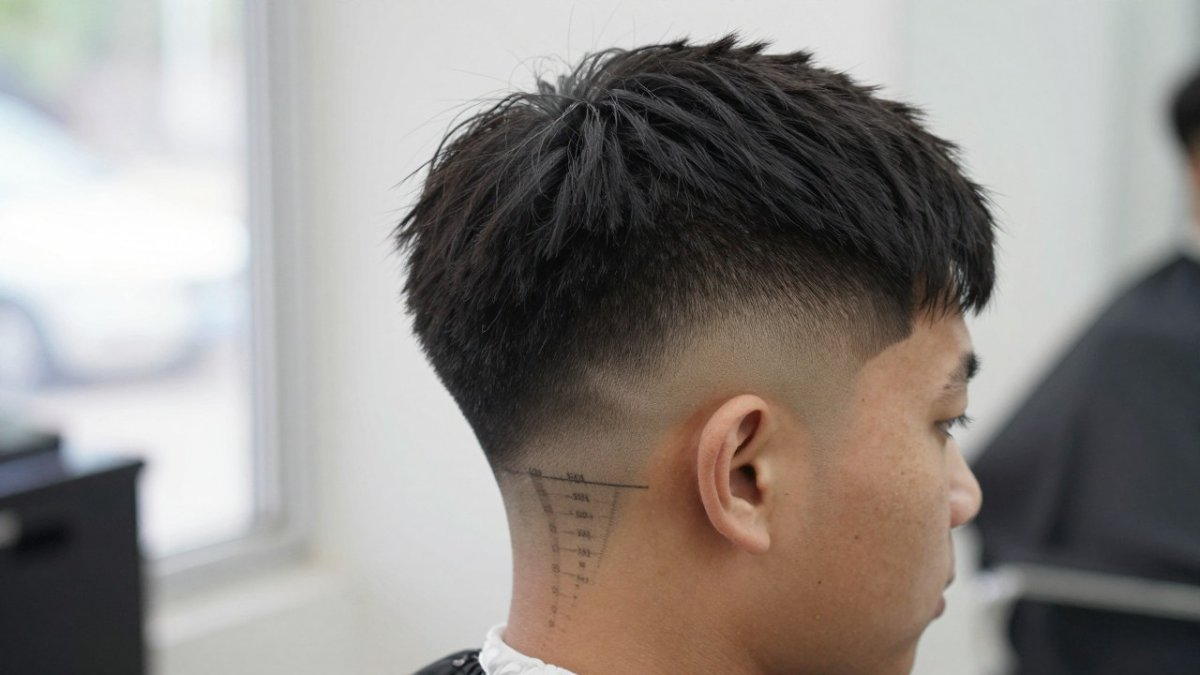
Close the loop after every visit
Within a day of the cut, add two things to your notes: what the barber did differently from your spec sheet, and what you want changed next time. This is the step almost everyone skips. Those notes make it easier to keep each detail consistent, from the fade to the finish, as you work toward a professional barber look with Gentlemen Republic.
Keep the routine steady
Book your next appointment before you leave the chair, with the same barber when possible, and request the same time slot. Bring the spec sheet and the photo album to every visit, even with a regular barber. Handing over the sheet takes ten seconds and removes the guesswork. If your barber is unavailable, hand the sheet to the substitute and ask them to read it back to you before they start.
What to do when a haircut goes wrong
Even a good system produces an occasional miss. Handle it in the chair, calmly and specifically. Name the gap against your spec sheet, "the fade is about a finger's width higher than last time", rather than saying "it's too short." A barber who cares about repeat business will correct it on the spot or explain why the result differs.
The spec sheet and photo routine that keeps a haircut consistent, at a glance:
| Spec sheet item | What to record | Example from the article |
|---|---|---|
| Sides and back | Guard number and fade height | #2 guard, low fade starting at the ear |
| Top | Length in inches or guard used | Length in inches or guard used |
| Neckline | Shape and height | Squared, rounded, or tapered |
| Sideburns | Where they end | Middle of the ear |
| Part | Side or middle, exact line | Side or middle |
| Photos | Front, both profiles, back | Four photos after each good visit |
Booking Your First Visit and Scoring the Results
Treat the first visit as a paid audition, not a commitment. Book a single cut, score it against a written rubric, and only then decide whether to rebook. A structured scorecard turns a vague feeling ("that was pretty good") into a decision you can defend and compare across candidates.
The five-category scorecard
Score each category from one to five, where one is poor and five is excellent. Write the scores down the same day, while the details are fresh.
- Match to reference (weight it heaviest): How closely did the finished cut match your photos and spec sheet? Compare the fade height, the top length, the neckline, and the sideburn placement one by one.
- Technical execution: Are the lines clean, the fade blended without visible steps, and the edges sharp? Run your hand over the fade, you should not feel ridges.
- Communication: Did the barber ask about your hair type, growth patterns, and how you style it? Did they repeat your specifications back before cutting?
A practical threshold: total the five scores out of 25. Anything at 20 or above is worth a second visit. Below 15, move to the next name on your shortlist. Between 15 and 19, rebook once and see whether the weak categories improve.
Test consistency on the second and third visit
The first cut only tells you what a barber can do once. To plan how often to return, see how often men should get haircuts.
A third visit confirms the pattern. Two matching cuts in a row is good evidence; three is a reliable baseline.
Ask about scheduling reliability before you commit
Consistency depends as much on the calendar as on the clippers. Before you settle on a barber, ask how far out they book, whether they take walk-ins, and what happens when they are on vacation or out sick.
Watch out: a barber who is consistently overbooked will rush your cut, and rushed cuts are where consistency breaks down, factor punctuality and booking buffer into your reliability score, not just the haircut itself.
Decide and lock in
Once a barber clears the scorecard threshold on two consecutive visits, stop shopping. Rebook before you leave each time, keep the same time slot when you can, and keep your spec sheet and photo album current. The goal is not to keep evaluating forever, it is to build a record detailed enough that your cut survives a substitute barber, a schedule change, or a move to a new shop.
Frequently Asked Questions
How many visits does it take to know if a barber is right for you?
Most clients need two or three visits with the same barber before they can judge consistency. The first visit shows the barber's skill, while the second and third show whether the result holds up when the barber works from your notes and reference photos. If the cut drifts noticeably in length, shape or fade blend between visits, the barber may still be talented but is not yet reliable for your needs. Keep a short record after each visit so the comparison is based on facts rather than memory.
What should you tell a new barber about your haircut?
Describe what you want in concrete terms: the length on the sides and top, the fade height, how much weight you want on top, and how often you need a trim. Bring two or three reference photos that show the back and sides as well as the front. Say how you style your hair day to day, because a cut that looks sharp after a barber's styling may need a different approach at home. Mention any sensitivities, such as tender skin or a receding hairline, so the barber can plan around them.
How do you get the same haircut every time?
Save a photo of the finished cut and note the clipper guard numbers or lengths the barber used. Ask the barber to describe the steps in plain language so you can repeat the request accurately. Book with the same barber when possible and rebook before you leave the chair so the schedule stays consistent. If you switch barbers, give the new one your saved photo and notes rather than assuming they will match the previous result.
How do I know if a barber understands my haircut request?
A barber who understands your request will repeat it back in specific terms, ask follow-up questions about length and fade height, and point out anything in your photos that may be hard to achieve with your hair type. Be cautious if the barber agrees to everything without asking questions or moves straight to cutting before confirming the plan. Their response during the consultation is often the clearest signal of how the appointment will go.