 Comparison
Precision Haircut vs Chain Barbershop: What Sets Them Apart
Last Updated: November 1, 2026
Quick Summary
A precision haircut is a method, not a price tier: the barber sets a reference length, sections the hair, and cuts each section against that reference for a symmetrical, intentional shape. Chain barbershops often offer quicker, standard cuts, while a dedicated studio builds in consultation and detailed work.
- Precision work sections the hair and cuts each area against one reference length.
- A chain cut is usually shorter and may not include a consultation.
- Precision studios typically take longer because sectioning and blending take more time.
- Ask who will cut your hair and whether you can book them again.
- Tight fades lose definition faster, so they need more frequent visits.
Table of Contents
- What a Precision Haircut Actually Means
- Precision Haircut vs. Regular Haircut: Where the Difference Shows Up
- Side-by-Side: Chain Barbershop and Precision Studio Compared
- How Long a Haircut Takes at Each Type of Shop
- Total Cost: Comparing Like for Like
- What to Ask for at a Barbershop Before You Sit Down
- How Often to Get a Haircut to Keep a Precision Cut Sharp
- Booking Your First Precision Appointment at A CUT ABOVE
- Frequently Asked Questions
Most men who book at a chain barbershop walk out with a decent haircut, so the real question is what a precision haircut at a dedicated studio adds on top of that. At A CUT ABOVE, we treat a haircut as a craft rather than a fixed-price transaction. Below, we compare the two models on skill, consistency, time, and total cost, so you can decide which one fits your routine.
What a Precision Haircut Actually Means
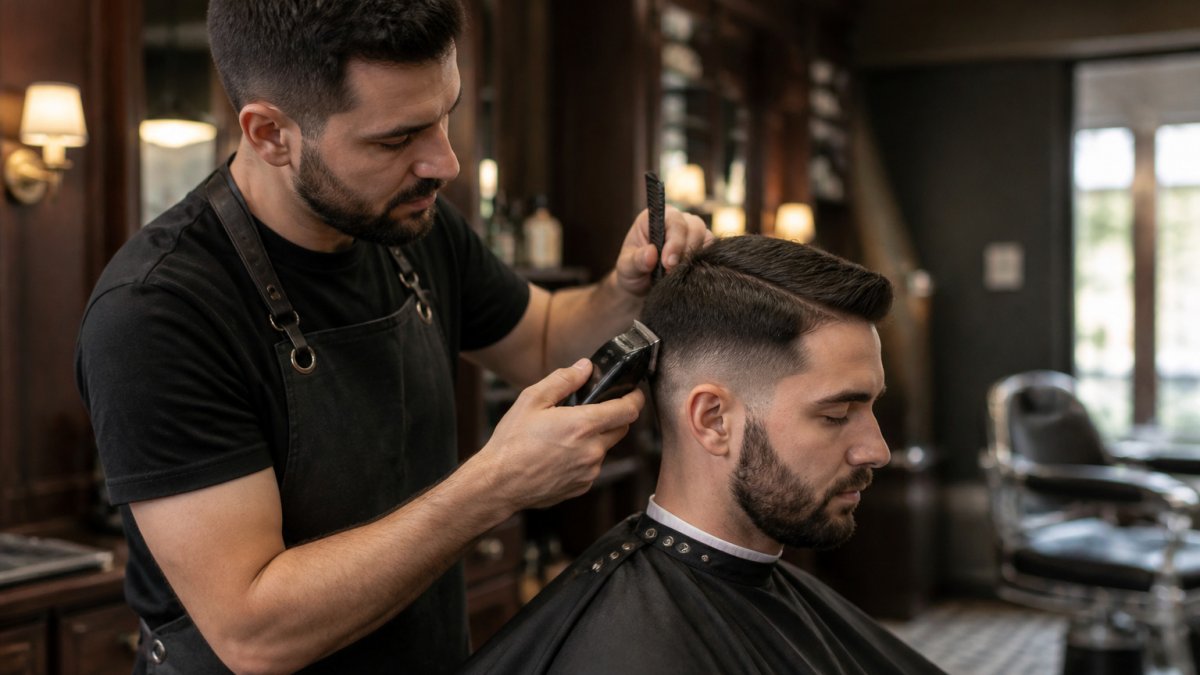
A precision haircut is not a style or a price tier. It is a method: the barber establishes a reference length, sections the hair into controlled subsections, and cuts each section against that reference so the final shape is symmetrical, balanced, and intentional from every angle. The label on a menu tells you little; the process tells you everything.
Precision work generally follows a repeatable sequence:
- Reference and sectioning. The barber sets a master length or guide line, then divides the head into clean sections (typically horizontal and vertical partings) so each area is cut relative to the same reference rather than freehand.
- Elevation and angle control. Hair is held at a consistent elevation and angle for each section. That is what produces an even blend instead of a visible step between clipper lengths.
- Blending and detailing. After the bulk is removed, the barber cross-checks the blend with clipper-over-comb or shear-over-comb work, then details the edges, neckline, and sideburns with trimmers for a clean finish.
- Symmetry check. Before you leave, the barber compares left to right, front to back, and checks the hairline and part against how your hair naturally falls.
- Dry finish and grow-out check. A final dry pass reveals how the cut will actually sit day to day, and the barber adjusts for cowlicks, density changes, and growth direction.
Precision also depends on the hair itself. Thickness, density, texture, and growth pattern change how a cut sits, which is why two men asking for the same style can leave with different results. A barber who sections carefully and cuts with clear intent accounts for those differences; a barber working freehand to a template does not.
Precision Haircut vs. Regular Haircut: Where the Difference Shows Up
A regular haircut usually follows a standard pattern: a set length, a familiar clipper guard, and a quick finish. That approach works well for a simple, low-maintenance style. It becomes less reliable when you want sharp edges, a smooth blend, or a cut that looks right after two or three weeks.
The gap appears in three places. First, the consultation, where a precision barber asks about your routine, your hair type, and how you style it. Second, the cutting stage, where sectioning and blending take more time. Third, the finish, where the barber checks symmetry and edges before you leave. A regular cut often skips the first and rushes the second.
Side-by-Side: Chain Barbershop and Precision Studio Compared
Neither model is wrong for every man. The right choice depends on what you want from the appointment.
| Factor | Chain Barbershop | Precision Studio |
|---|---|---|
| Consultation | Often brief or optional | Built into the appointment |
| Time per cut | Usually shorter | Typically longer, by design |
| Barber continuity | Varies by location and day | Easier to keep the same barber |
| Best for | Quick, standard cuts | Detailed styles and clean blends |
Skill, experience, and who actually cuts your hair
The person holding the clippers matters more than the sign on the door. In a chain, you may see a different barber each visit, and skill can vary from one person to the next.
Ask who will cut your hair and how long they have been doing precision work.
Consistency between visits
At a chain, consistency depends on whether you see the same person and whether they have your notes. If you value a repeatable result, ask whether your barber can be booked again and whether your preferences are recorded.
How Long a Haircut Takes at Each Type of Shop
Time is the most common objection to a precision studio, and it is a fair one.
Plan for the appointment length when you book, not just the cut itself. If you are short on time, a chain may fit your schedule better.
Total Cost: Comparing Like for Like
Comparing prices only works when the services match. A basic clipper cut at a chain and a precision cut with consultation are different services, so the sticker price alone does not answer the question. The useful comparison is total cost over a period of time, not the number on the sign.
Build the comparison from four parts:
- Base service price. What the shop charges for the cut you actually want, not the entry-level menu item. Ask whether the quoted price includes a consultation, a wash, or a finish.
- Add-ons. Beard work, hot towel, lineup, or styling products are often priced separately. Add them in if you use them, because a low base price with three add-ons can exceed a higher all-inclusive price.
- Tip. Tipping is customary in the United States, and the amount is your choice. Whatever you normally tip, apply the same percentage to both options so the comparison stays fair.
- Maintenance frequency. This is the part most comparisons miss. A tight fade or sharp lineup loses definition faster than a longer, textured cut, so it needs more frequent visits to stay sharp. A cut that holds its shape longer can cost more per visit but less per month.
A simple way to compare: multiply the full per-visit cost (base plus add-ons plus tip) by the number of visits you expect in a year for each option. The lower per-visit price does not always produce the lower annual cost, and the higher per-visit price does not always produce the higher one.
For current pricing on specific services, check our website or contact us for a quote before you book. Bring the same questions to any shop you are comparing so the numbers line up.
What to Ask for at a Barbershop Before You Sit Down
Before the cape goes on, a few questions will tell you a lot about the shop and the barber:
- Who will be cutting my hair, and can I book them again?
- Will you consult with me on length and style before you start?
- How do you section the hair for a precision cut?
- Do you keep notes on my preferences for future visits?
- How long should I plan for this appointment?
Clear answers to these questions set expectations before you sit down and make it easier to judge the result when you leave. Our complete guide to professional men's haircut services covers what to expect at each step of the visit.
How Often to Get a Haircut to Keep a Precision Cut Sharp
How often you return depends on the style. Tight fades and sharp edges lose their definition faster than longer, textured cuts, so they need more frequent visits. Our complete guide to how often men should get haircuts explains the schedule for each style.
Longer or more relaxed styles can go longer between cuts, but the shape will still soften over time.
Booking Your First Precision Appointment at A CUT ABOVE
Your first visit is the best time to set the standard for every visit after it.
When you are ready, book your precision haircut appointment with A CUT ABOVE, and you can review our booking options before you pick a time.
Frequently Asked Questions
What is the difference between a precision haircut and a regular haircut?
A regular haircut focuses on getting the hair to a general length and shape. A precision haircut uses sectioning, measured guide lines, and controlled blending so each layer and edge is placed deliberately. The result holds its shape longer and grows out more evenly. Many barbers call this work precision cutting, and sectioning is one visible sign of it. The difference is most noticeable in clean lines, smooth blends, and how the haircut looks two to three weeks later.
How is a precision haircut different from a chain barbershop haircut?
Chain barbershops are built for speed and volume, with standardized cuts and shorter appointments. A precision-focused studio usually starts with a consultation, works with the hair type and desired style, and keeps the same barber across visits where possible. Chain shops can still deliver a good cut, especially for a simple, familiar style. The right choice depends on how much that detail matters to you.
How long does a precision haircut take?
A precision haircut typically takes longer than a quick chain cut because the barber spends more time on consultation, sectioning, and blending. Plan for a visit that runs well beyond a basic trim. If you are short on time, tell the shop upfront so they can plan the appointment around the window you have.
How often should I get a precision haircut?
Shorter fades and tight edges lose their shape faster and may need attention sooner, while longer styles can go longer between visits. Ask your barber for a schedule based on your hair and style.
If you want a deeper look at what a precision cut costs and whether it is worth the difference, read our breakdown of whether a premium haircut costs more than a chain barbershop. It walks through the numbers line by line.